



By Payusnomind · Nov 19, 2025
Premium
 Chance The Rapper Wins Trail Against Man...
  Streaming Fraud Is Stealing From Artists...
  Are Major Labels Trying to Shut Down DIY...
 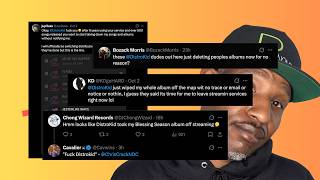 Distrokid Removing Artist Releases Witho...
  Amuse Music Distribution & Customer Supp...
 Top streaming platforms like Spotify and Apple Music earn revenue from subscriptions and, in Spotify’s case, advertising. User payments are pooled into a single revenue bucket. The platform takes its cut off the top, and the remaining amount is distributed to rights holders based on streaming performance.
The commonly cited split is 70% to rights holders / 30% to the DSP, though the exact mechanics vary by platform and licensing agreements.
That 70% is not paid per stream. It is divided proportionally based on each song’s share of total streams across the platform during a given period.
Revenue is capped
Streams are not
Streaming platforms do not sell songs, albums, or streams. Their revenue does not increase when people listen more. Once subscription and ad revenue is collected, the pool is fixed.
Imagine I hire people to hand out flyers and give them a fixed budget of $1,000.
If 1,000 flyers are handed out total, and you distribute 100, you earn $100.
If 1,000,000 flyers are handed out total, and you still distribute 100, your share drops to $0.10.
Your effort didn’t change. The value of each unit did.
Streaming works the same way. Artists only earn more if the total revenue pool increases, not if total streams increase.
More listening without more revenue dilutes payouts.
The DSP doesn’t earn less because its income isn’t tied to consumption. Rights holders do. This creates structural tension: artists license their catalogs to platforms, but excessive consumption spread across too many rights holders reduces payouts to the very people supplying the product.
If rights holders don’t receive value, there’s no incentive to license content. If content disappears, DSPs have nothing to sell subscriptions against. That’s the underlying problem platforms are trying to solve.
This post continues with the deeper breakdown, strategy, and implementation on the next page.