What this is
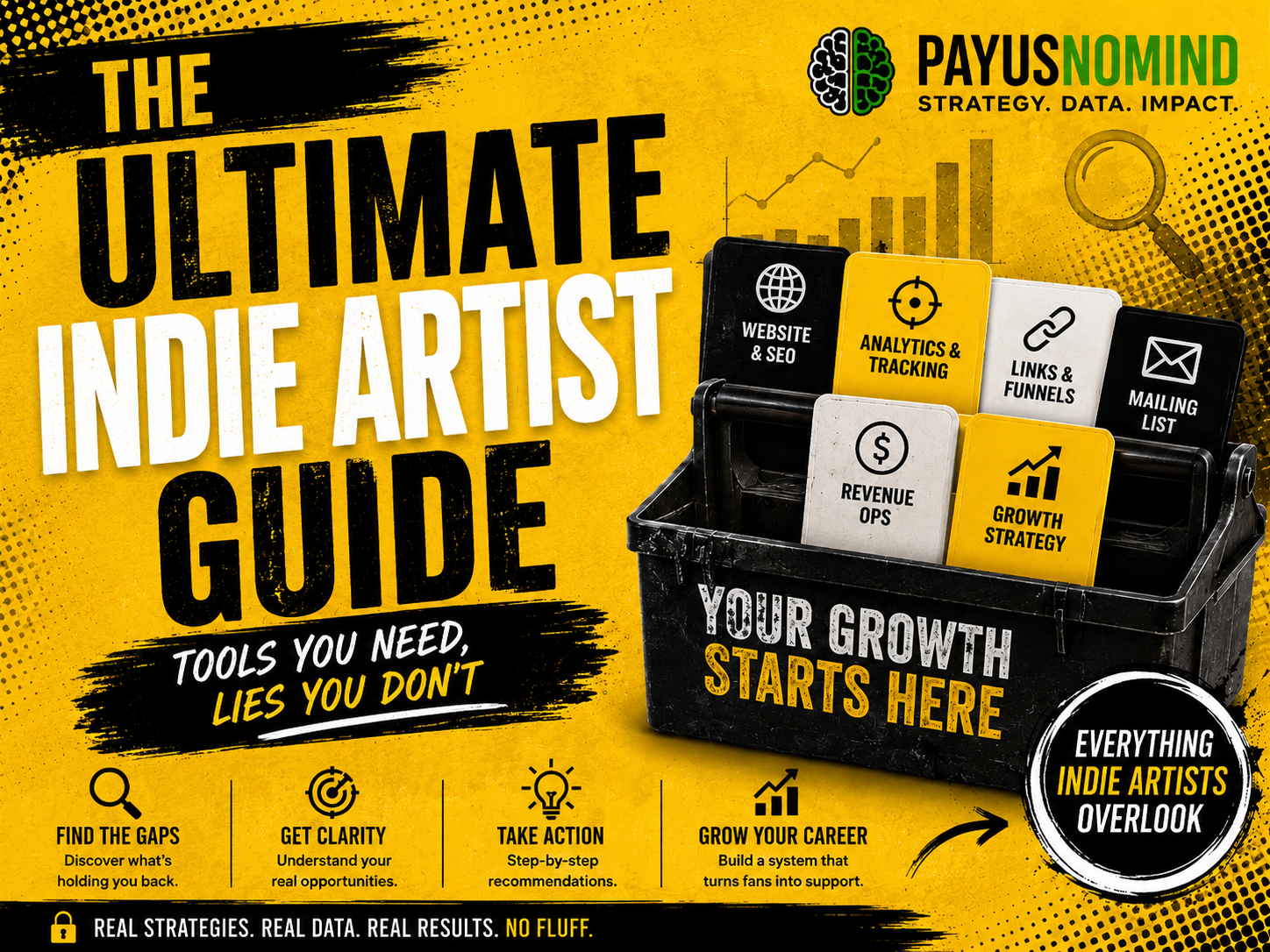
The modern music industry is no longer just competitive — it’s adversarial by default. Streaming platforms, distributors, ad platforms, and service providers all operate on incentives that are rarely aligned with yours. Monetization thresholds, fraud enforcement, opaque contracts, misleading feature sets, and marketing narratives built on exception cases have changed the rules quietly — and most artists are learning too late. The Ultimate Indie Artist Guide exists to close that gap.
What this guide really gives you
1) A reality-based map of the digital music economy
- Why streaming is a market-share system, not a fixed payout model
- How monetization thresholds quietly disqualify artists with real streams
- Why fraud enforcement is structural, not personal — and how artists get trapped without doing anything “wrong”
- How platforms prioritize qualifying demand, not raw volume
This reframes how you should think about releases, promotion, and growth — and why many common strategies have become liabilities instead of assets.
2) Digital distribution, without the illusions
- Every major pricing model (flat fee, per-release, percentage, hybrid)
- Why “cheap” and “free” distribution often creates long-term risk
- How exclusivity actually works — and where it hides
- The difference between DIY distribution services and real distribution deals
- How to read artist agreements quickly and identify control points before signing
Not rankings. Incentives. So you know why companies behave the way they do before something goes wrong.
3) Streaming fraud, KYA, and the enforcement reality
One of the most important — and least discussed — parts of the guide.
- How streaming fraud is defined (and why definitions matter less than patterns)
- Why artists are held fully responsible with zero investigative power
- What Know Your Artist (KYA) really involves and where the industry is heading
- How distributors protect themselves first — and what that means for you
- Exactly what to do if you’re flagged, step by step, including what not to say or do
Written to be used under pressure, not skimmed for theory.
4) Advertising platforms explained by incentives — not hype
- Clear breakdowns of YouTube, Meta, TikTok, Spotify, SoundCloud, Audiomack, and Snapchat
- Why some platforms feel “cheap” and others feel punishing
- What each platform is genuinely good at — and what it’s structurally bad at
- How platform behavior affects outcomes more than targeting tricks
This removes guesswork and stops artists from blaming themselves for misaligned strategies.
5) Budget-based advertising systems (not fantasy funnels)
- $5/day: testing without burning money
- $20/day: building a functional funnel
- $100/day: running a real system without scaling inefficiency
Each tier includes platform choices, campaign objectives, what success actually looks like, and common mistakes that quietly drain budgets. This is about capital efficiency, not virality.
6) Promotion and playlisting: how to spot the traps
- Why most playlist services profit from confusion, not results
- How guaranteed streams create long-term platform risk
- Which signals actually matter to DSPs — and which don’t
- How to evaluate services without needing insider access
No lists. No endorsements. Pattern recognition.
7) Publishing, PROs, and royalty overlap — cleanly explained
- Which entities are essential
- Which are optional
- Where overlap causes missed royalties or wasted money
- How to avoid double-collecting setups that create more problems than income
Focus on who does what, and what you actually need.
8) Data, reporting, and control
- What royalty reports should be able to answer — and why most can’t
- Why “net receipts” language matters
- How reporting quality reflects who a platform is built for
- What to track, what to ignore, and what dashboards won’t tell you
This is about control, not analytics obsession.
What makes this different
- No affiliate pressure
- No platform cheerleading
- No pretending the system is fair
- No advice that only works for edge cases
- Written with one assumption: eventually, something goes wrong — and your decisions must survive that moment
What you also get
- Best-practice frameworks you can reuse
- Decision checklists you can apply before spending money or signing anything
- Clear mental models that replace guesswork
- One full year of access to Payusnomind’s Marketing Brainz, extending the guide into ongoing analysis and updates
Who this is for
- Artists who want clarity instead of encouragement
- Artists who care about long-term ownership and leverage
- Artists who don’t want success to become a legal or operational mess
- Artists tired of learning things only after they’ve already caused damage
If you’re looking for motivation, this isn’t it. If you’re looking for truth, context, and protection, this guide was written for you.